
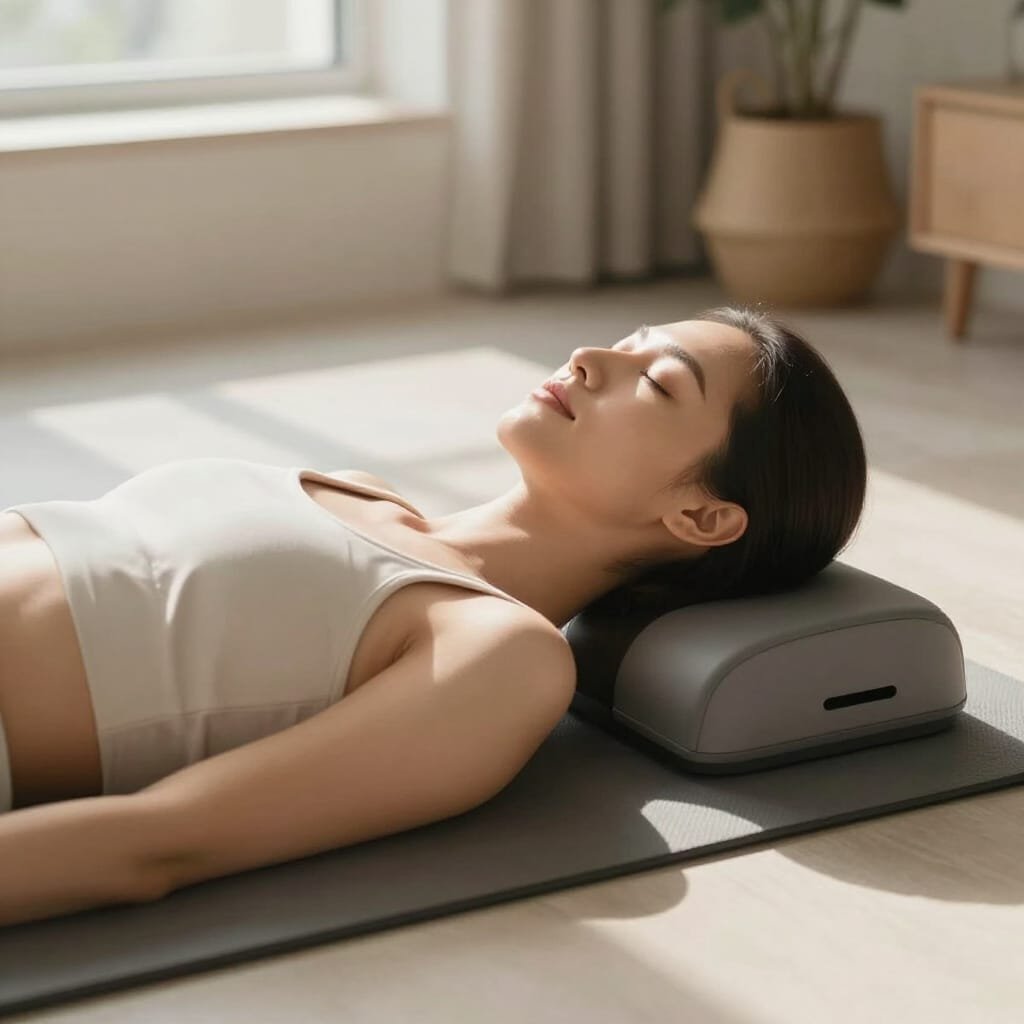
Chi Machine Therapy and Stress Management: What the Oscillation Actually Does
- A Chi Machine uses motorized ankle cradles to gently oscillate the whole body side to side, a passive movement pattern often described as a “goldfish motion.”
- Some people use it as a stress management technique because the rocking motion is associated with a relaxation response, though this is different from active exercise or meditation.
- A university study comparing four relaxation modalities found the Chi Machine reduced measured stress indicators about as much as sitting meditation, with no method proving clearly superior.
- The device is not a treatment for anxiety disorders or chronic pain, and people with back problems, nerve conditions, pacemakers, or who are pregnant should get medical clearance before use.
- Sessions are typically short, 5 to 15 minutes, and the calming effect appears to fade if the technique isn’t paired with other stress management habits.
If you’re researching chi machine therapy and stress management techniques, the short answer is this: a Chi Machine is a passive exercise device that oscillates your body from side to side while you lie on your back with your ankles resting in motorized cradles, and some people use short daily sessions as one tool among several for winding down. It doesn’t require any physical effort on your part, which is part of its appeal for people who find active relaxation techniques like yoga or long meditation sessions hard to start on a stressful day. What it isn’t is a clinically validated anxiety treatment, and the research comparing it to meditation or massage chairs is limited to a handful of studies, not a large body of clinical evidence. This article looks at how the mechanism works, what’s actually been measured, and where the claims outrun the data.
What Chronic Stress Does to the Body
Before evaluating any stress management tool, it helps to understand what “stress” means physiologically, because the term gets used loosely in marketing copy. When the body perceives a threat, real or psychological, the sympathetic nervous system triggers the familiar fight-or-flight response: heart rate rises, breathing shortens, muscles tense, and blood is redirected away from digestion toward the limbs. This response is useful in short bursts. The problem is chronic, low-grade activation of that same system, which is what most people mean when they describe feeling “stressed” at work or in daily life.
Sustained sympathetic activation is associated with muscle tension, headaches, disrupted sleep, and elevated blood pressure over time. The body’s counterbalance is the parasympathetic nervous system, sometimes called the “rest and digest” mode, which governs resting heart rate, digestion, and the physical sense of calm. Most recognized stress management techniques, from deep breathing to progressive muscle relaxation, work by deliberately engaging this parasympathetic branch rather than by eliminating the stressor itself. That distinction matters for the Chi Machine specifically: it’s positioned as a way to nudge the body toward that parasympathetic state through passive rhythmic motion, not as a way to resolve the underlying source of stress.
How the Chi Machine’s Oscillation Works
Mechanically, the device is straightforward. You lie on the floor or a mat, place your ankles in padded cradles at one end of the machine, and switch it on. A motor swings your lower body side to side in a figure-eight pattern, typically at a set rhythmic speed, while the rest of your body follows the motion in a loose, wave-like way up through the torso. Manufacturers describe this as mimicking the movement of a swimming fish, which is where the “goldfish exercise” nickname comes from.
Because the motion is externally driven rather than something you generate with your own muscles, it’s classified as passive exercise rather than active exercise, and that distinction is worth taking seriously. Active exercise, even gentle forms like walking, produces cardiovascular and muscular adaptations over time through your own effort and load-bearing. Passive oscillation does not train muscles or build cardiovascular fitness in the same way. What it does produce, according to the people who use it, is a rocking sensation similar to being gently swayed, which some users report as immediately relaxing in the same way a hammock or rocking chair can be. Sessions are generally kept short, often 5 to 15 minutes, partly because manufacturers note that longer exposure isn’t necessary for the sensation and partly because the constant rhythmic movement can feel disorienting if extended too long, especially for first-time users.
The Parasympathetic Connection: Why Passive Movement May Feel Calming
The theoretical link between passive rocking and stress reduction isn’t unique to the Chi Machine. Rhythmic, predictable motion is a recognized soothing input across a range of contexts, from rocking infants to sleep, to the use of rocking chairs by adults, to vestibular stimulation techniques used in some clinical and occupational therapy settings. The working idea is that steady, low-intensity motion can help shift activity away from the sympathetic “alert” state and toward parasympathetic engagement, similar in spirit to how slow, extended-exhale breathing is thought to stimulate the vagus nerve and support a calmer physiological state.
It’s worth being precise about what this means for a Chi Machine session specifically: the mechanism is plausible, but it has not been isolated and confirmed for this device through rigorous, device-specific clinical trials. Much of what’s written about the Chi Machine’s effect on the nervous system draws on general principles of relaxation physiology and applies them to the device by inference, rather than citing dedicated randomized studies on the Chi Machine itself. That’s a meaningful gap. A device can produce a genuinely pleasant, calming sensation for a user without that sensation being backed by a distinct, well-documented physiological pathway specific to the product. Both things can be true at once, and it’s the second claim, not the first, that requires more evidence than currently exists.
What the Research Actually Shows
The most relevant piece of independent research comes from a university study comparing four relaxation approaches, including a Chi Machine, a massage chair, a rejuvenation lounger, and sitting meditation, among thousands of college students using a campus relaxation center. Blood pressure, heart rate, and self-reported stress were measured before and after each session. The result: all four modalities produced a measurable, short-term reduction in physiological and perceived stress markers, and there was no statistically significant difference in effectiveness between the Chi Machine and sitting meditation for most measures. For systolic and diastolic blood pressure specifically, the Chi Machine, massage chair, and meditation all outperformed the fourth modality in that comparison.
That’s a useful data point, but it’s also narrow in scope. It measured immediate, transient changes after a single relaxation-center visit, not long-term stress management outcomes over weeks or months, and it wasn’t a controlled clinical trial designed to isolate the Chi Machine’s mechanism from general expectation or the simple act of lying down and resting for several minutes. Outside of this comparison, most of what circulates about the Chi Machine and stress comes from manufacturer materials, spa and wellness center marketing, or first-person testimonials, none of which carry the weight of controlled research. The honest summary is that a short Chi Machine session appears to produce a real, measurable dip in stress indicators in the moment, comparable to sitting meditation, but there is no strong evidence that regular use produces durable, long-term stress reduction the way established techniques like structured breathing practice, physical activity, or cognitive behavioral approaches do.
Using It as One Technique Among Several
Given the evidence available, the more defensible way to think about the Chi Machine is as a short-session relaxation tool that can sit alongside other stress management techniques, not as a replacement for them. In practice, that means treating a 10-minute session the way you might treat a short guided breathing exercise: as a brief circuit-breaker on a stressful day, not a comprehensive stress management program on its own.
Some people pair the session with slow breathing while the machine moves them, which combines a technique with independent supporting evidence, extended exhalation and vagal stimulation, with the passive motion itself. Others use it at a consistent time, such as after work, to create a habitual cue that signals the transition out of a high-alert state, similar to how a consistent wind-down routine supports sleep. What doesn’t hold up is treating the machine as sufficient by itself for managing significant or chronic stress, anxiety, or a diagnosed stress-related condition. For those situations, the Chi Machine may be a supplementary comfort measure at best, not a substitute for therapy, medical evaluation, or established clinical stress management techniques.
Who Should Be Cautious Before Using a Chi Machine
Because the Chi Machine physically moves the spine, hips, and lower back through a repetitive side-to-side range of motion, it is not automatically appropriate for everyone, particularly the audience most drawn to gentle, effort-free relaxation tools: older adults and people managing back or nerve-related conditions. Anyone with an existing back injury, herniated disc, spinal surgery history, or a diagnosed nerve condition should get clearance from a doctor or physical therapist before trying the device, since passive spinal movement that feels fine for one person’s anatomy can aggravate another’s.
The same caution applies to pregnancy, recent surgery of any kind, and implanted medical devices such as pacemakers, where manufacturers themselves typically advise against use without a physician’s approval. Older adults with balance concerns, osteoporosis, or cardiovascular conditions should also check with a healthcare provider first, since the oscillating motion, while gentle, is still a physical stimulus with real effects on circulation and the vestibular system. None of this means the device is unsafe for the general population; it means the sensible approach for a sensitive audience is a conversation with a healthcare provider before starting, not an assumption that “gentle” and “passive” automatically mean “safe for everyone.”
Building a Realistic Stress Management Routine Around It
If you decide to try a Chi Machine as part of a broader stress management approach, it’s worth setting expectations that match what the evidence supports. Start with short sessions, in line with typical manufacturer guidance of 5 to 15 minutes, rather than assuming longer automatically means more benefit. Track how you actually feel afterward for a couple of weeks rather than judging it after a single session, since the university comparison study measured immediate effects, not cumulative ones.
Pair it with techniques that have stronger independent evidence for chronic stress specifically, such as regular physical activity, consistent sleep habits, and structured breathing or mindfulness practice, rather than expecting the device to carry the full load. And keep the marketing language in perspective: phrases describing the Chi Machine as balancing “energy pathways” or activating deep cellular healing are traditional or promotional framing, not clinical descriptions, and they shouldn’t be the basis for treatment decisions around a genuine stress-related health condition. Used with those boundaries in mind, a Chi Machine session is a reasonable, low-effort addition to a stress management routine; used as a stand-alone fix for significant stress or anxiety, it’s asking more of the device than the current evidence can support.
Is the Chi Machine an effective stress management technique?
Limited research, including a university comparison study, found it produced a short-term reduction in measured stress indicators similar to sitting meditation. That’s a real but narrow finding, not proof of long-term stress management benefits from regular use.
How long should a Chi Machine session be for relaxation?
Most manufacturer guidance and typical use suggest 5 to 15 minutes per session. Longer sessions aren’t shown to add benefit and can feel disorienting for some users.
Can a Chi Machine replace meditation for stress relief?
Not based on current evidence. One study found comparable short-term effects between the two, but meditation has a much larger body of independent research supporting long-term stress and mental health benefits.
Is the Chi Machine safe for people with back problems?
Not automatically. Anyone with a back injury, herniated disc, or nerve condition should get clearance from a doctor or physical therapist first, since the device moves the spine through a repetitive side-to-side motion.
Can older adults use a Chi Machine for stress management?
Many older adults do use it, but those with balance issues, osteoporosis, or cardiovascular conditions should check with a healthcare provider beforehand, since the oscillation is a genuine physical stimulus, not a passive no-risk activity.
Does the Chi Machine actually calm the nervous system?
The rocking motion is theorized to support a parasympathetic, “rest and digest” response, similar in principle to other rhythmic soothing motions. This mechanism has not been confirmed through device-specific clinical trials, so it should be considered plausible rather than proven.
Is Chi Machine therapy safe during pregnancy?
Manufacturers generally advise against use during pregnancy without a doctor’s approval. Anyone who is pregnant should confirm with their physician before trying it.
Sources
- A comparison of four stress reduction modalities on measures of stress (ScienceDirect)
- A comparison of four stress reduction modalities (Emerald)
- Use the Parasympathetic Nervous System to Lower Stress (Hospital for Special Surgery)