
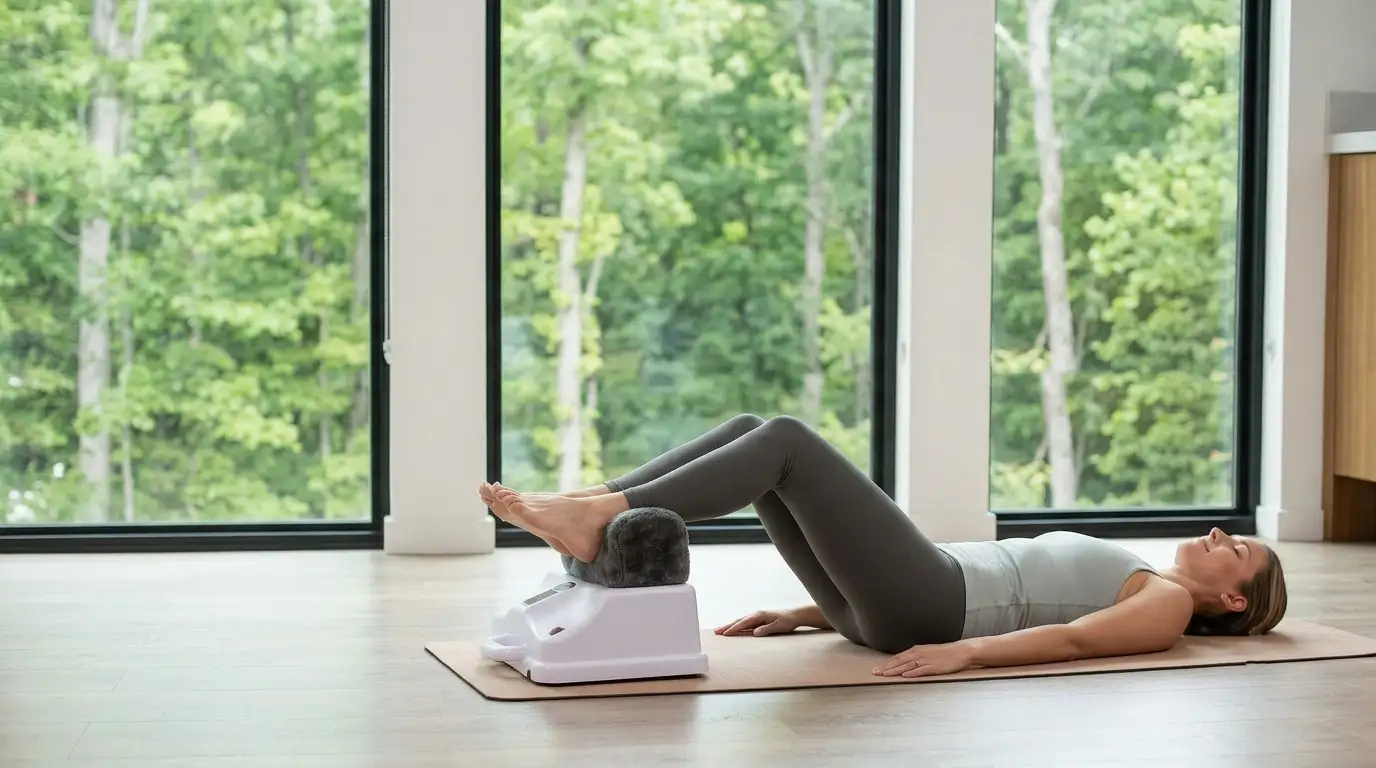
How Long Should You Use a Chi Machine? A Safe Duration Guide
- Beginners should start with only 2–3 minutes per session, or under 1 minute if in poor health, before working up gradually.
- Increase session length in 2-minute increments only once your body has clearly adapted to the movement.
- Adults over 55 should follow a slower build-up: 2–5 minutes daily in week one, 5–10 minutes in week two, and the full 15 minutes by week three if no discomfort occurs.
- Twice-daily use of 10–15 minutes each is generally considered the ceiling for maximum benefit — more is not better.
- Stop immediately and consult a physician if a session causes sharp pain, dizziness, or unusual discomfort, especially if you have back or nerve issues.
The short answer: most people should start with 2 to 3 minutes on a Chi Machine and build up slowly, over two to three weeks, to a maximum of 15 minutes per session, used once or twice a day. There is no single number that fits everyone — your starting point depends on your age, your current health, and how your body responds to the swinging motion. For older adults, or anyone managing back pain or nerve sensitivity, the safe approach is even more conservative: shorter sessions, longer adaptation periods, and close attention to how the body reacts session by session. The rest of this guide breaks down exactly how to time your sessions by age and condition, how often to use the machine each day, and the warning signs that mean you should shorten or stop a session.
Why Session Length Isn’t the Same for Everyone
A Chi Machine moves your legs and hips in a rhythmic, side-to-side oscillation, typically around 140 cycles per minute. That constant motion is gentle on paper, but it engages the spine, hips, and lower back continuously for the entire session — which is exactly why duration matters so much more here than with, say, a stationary bike you can simply slow down mid-workout.
For someone with a healthy, flexible spine, a few extra minutes on the machine rarely causes issues. For someone over 55, recovering from an injury, or managing chronic back or nerve pain, those same extra minutes can be the difference between a relaxing session and a day spent recovering from soreness. The body needs time to adapt to a movement pattern it isn’t used to, and that adaptation period — not the total number of minutes you’re “supposed” to hit — should drive your schedule.
How Long Should Beginners Use a Chi Machine?
Every source on proper Chi Machine use agrees on one point: don’t start with a full session. First-time users should limit themselves to 2 to 3 minutes, and if you’re currently in poor health or recovering from any condition, less than 1 minute is the safer starting point.
From there, the progression is simple and deliberately slow:
- Add time only in 2-minute increments, and only once your body has clearly adjusted to the previous duration without soreness or discomfort.
- Never jump straight to the full 15-minute session in your first week, even if it feels easy during the session itself — discomfort from an unfamiliar movement pattern often shows up hours later, not during use.
- Use the machine up to twice a day once you’re comfortable, since twice-daily sessions tend to provide the best results without adding session length.
If you feel any unusual pain rather than the expected muscle sensation of a new activity, that’s your cue to stay at your current duration — or shorten it — for a few more sessions before trying to extend again.
Recommended Duration by Age Group
Age changes how quickly the body should be pushed toward the 15-minute target. The table below reflects the two standard progressions most manufacturers and instructional guides recommend.
| Week | Under 55 | Over 55 |
|---|---|---|
| Week 1 | 5 minutes, twice daily | 2–5 minutes, once daily |
| Week 2 | Build toward 10 minutes if comfortable | 5–10 minutes, once daily |
| Week 3 | Up to 15 minutes if no discomfort | Full 15-minute session if no discomfort |
The key difference isn’t the ceiling — both groups can eventually reach 15 minutes — it’s the starting point and pace. Adults over 55 start with roughly half the initial session length and take an extra week to reach the same maximum, which gives connective tissue, circulation, and the nervous system more time to adjust between increases.
If you have a spinal condition, recent joint replacement, or nerve-related pain regardless of age, it’s worth treating yourself as the “over 55” schedule even if you’re younger — the slower pace protects you either way.
How Often Can You Use a Chi Machine Each Day?
Once you’ve built up to your target duration, twice-daily sessions are generally considered the point of diminishing returns — going beyond that doesn’t appear to add meaningful benefit and increases the chance of overworking muscles that are still adapting to passive movement. A typical routine looks like:
- One session in the morning to encourage circulation before the day’s activity.
- One session in the evening, at least 30 minutes after eating, to help the body relax before rest.
Using the machine on most days of the week, rather than sporadically, is what allows benefits like improved circulation and lymphatic drainage to build up. Some regular users report doing five to six sessions a week rather than daily, which is a reasonable middle ground if a daily habit isn’t practical — consistency across the week matters more than hitting every single day.
Signs You Should Shorten or Stop a Session
Because the Chi Machine engages the spine and lower body continuously, it can also make you more aware of circulation issues or areas of tension you weren’t previously noticing. That’s normal and part of how the device works — but it’s different from pain that signals you should stop.
Cut a session short, or skip it entirely that day, if you notice:
- Sharp or shooting pain anywhere along the spine, hips, or legs
- Dizziness or lightheadedness during or after use
- Numbness or tingling that wasn’t present before the session
- Nausea, which can occur if a session runs too long too soon
- Any pain that persists well after the machine has stopped
If a pain point does come up during use, it’s better to investigate the cause before your next session rather than push through it. The device is designed to increase awareness of circulation and oxygen flow, so a twinge you notice during use may be worth mentioning to a physician, particularly if you already manage a back or nerve condition.
When Not to Use a Chi Machine at All
Duration guidance only applies once it’s actually safe to use the machine. Certain conditions call for avoiding it altogether, at least temporarily:
- Within 3 months of surgery or a bone fracture
- During a serious infection or with a bleeding injury
- If you have diagnosed heart disease
- During pregnancy
- Within 30 minutes of eating a meal
If you’re managing an existing back condition, nerve pain, or another chronic health issue, checking with a physician before your first session — not just when something feels wrong — is the safer starting point. This is especially true for older adults, where a new pain during a passive exercise device can be harder to distinguish from an unrelated underlying issue without a professional opinion.
What to Do After Each Session
How you finish a session matters almost as much as how long it lasted. Standing up too quickly after 15 minutes of continuous hip and spine movement is one of the more common ways people turn a good session into a sore one.
- Stay lying down for 2 to 3 minutes after the machine stops, removing your feet from the cradle if needed.
- Gently stretch your spine and hips while still on the floor before attempting to stand.
- Roll onto one side rather than sitting straight up, then rise slowly.
- Drink a full glass of water afterward to support circulation.
This short cooldown routine is particularly important for older adults or anyone with balance concerns, since standing up abruptly after passive movement can cause momentary lightheadedness.
How long should a beginner use a Chi Machine?
Start with 2 to 3 minutes, or under 1 minute if you’re in poor health. Increase by 2-minute increments only once your body has adjusted to the current duration without discomfort.
Can I use a Chi Machine every day?
Yes, once you’ve built up gradually. Daily use, or five to six times a week, is common among regular users and tends to produce more consistent results than sporadic sessions.
Is 15 minutes on a Chi Machine too long?
No — 15 minutes is the typical maximum recommended session length, but it should only be reached gradually over two to three weeks, not attempted in your first sessions.
How long should seniors use a Chi Machine?
Adults over 55 should start with 2 to 5 minutes daily, extend to 5–10 minutes in the second week, and reach the full 15 minutes by the third week only if no discomfort occurs.
How many times a day can you use a Chi Machine?
Twice a day is generally considered the practical maximum once you’ve reached your target session length, with at least 30 minutes after eating before each use.
What happens if you use a Chi Machine for too long?
Overextending sessions too quickly can lead to soreness, dizziness, or discomfort in the back and hips, since the body hasn’t had time to adapt to the continuous movement.
Should I use a Chi Machine before or after eating?
After eating is not recommended within 30 minutes of a meal. Using the machine on an empty or settled stomach reduces the risk of nausea from the swinging motion.
Is a Chi Machine safe for people with back pain?
It can be, when session length is limited and increased slowly. Anyone with an existing back or nerve condition should check with a physician before starting and stop immediately if sharp pain occurs.
Sources
- Use Chi Massage Chi Vitalizer Machine — chimassage.nl
- How to Use the Chi Machine — wikiHow
- Chi Machine and its Important Benefits — Austin Ozone
See also