
Chi Machine Benefits for Stress Relief and Sleep: What the Evidence Actually Supports
- A chi machine moves your legs and hips in a side-to-side “goldfish” oscillation while you lie passively — it does not require muscular effort on your part
- The relaxation many users report is plausible and consistent with research on rhythmic, rocking motion, but no strong clinical trial has tested the Chi Machine specifically for stress or sleep outcomes
- Manufacturer claims about cortisol reduction, lymphatic “detox,” or nervous system “reprogramming” go well beyond what independent evidence supports
- People with back conditions, nerve disorders, pacemakers, or recent surgery should get medical clearance before using one, since passive spinal movement is not risk-free for everyone
- Best framed as a short relaxation ritual, not a treatment for chronic stress or sleep disorders
If you’re looking into chi machine benefits for stress relief and sleep, the honest answer is: the motion is genuinely relaxing for many people, but the science specifically validating a Chi Machine for stress or sleep is thin. The device oscillates your ankles and hips side to side while you lie on your back, producing a rhythmic, low-effort sensation that some users compare to being gently rocked. That rocking sensation has a real physiological basis — rhythmic movement is known to influence the nervous system’s relaxation response — but the research behind that comes mostly from studies on rocking chairs, hammocks, and vestibular stimulation, not from clinical trials on this specific product. This article separates the mechanical facts, the marketing language, and the actual research on passive, rhythmic movement, so you can set expectations that match reality rather than a sales page.
How the Chi Machine’s Motion Actually Works
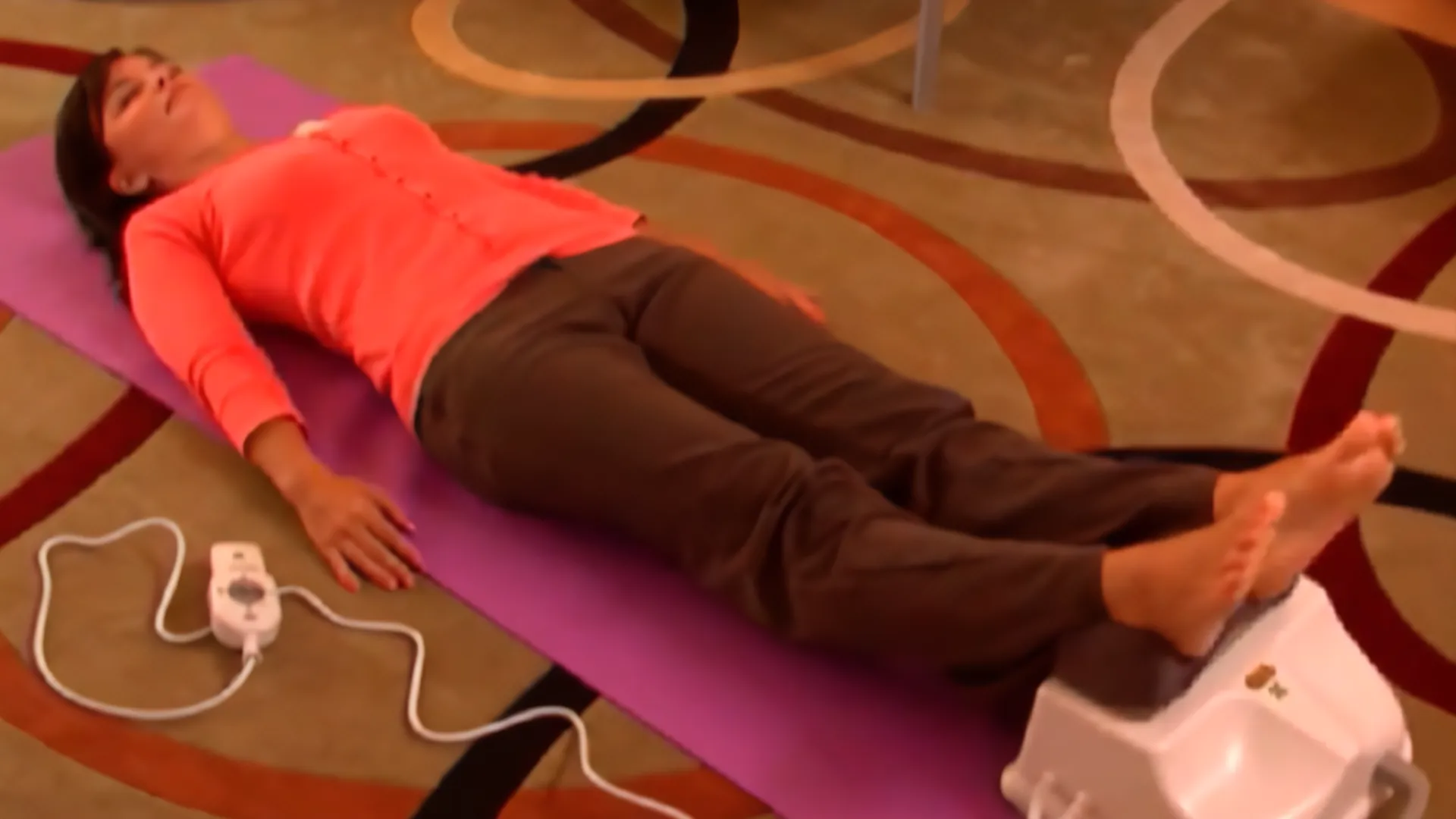
The mechanism is straightforward and doesn’t need any embellishment to be interesting. You lie on your back with your ankles resting in two cradles at the base of the machine. A motor swings those cradles from side to side at a set frequency, which translates into a wave-like motion moving up through the ankles, knees, hips, and lower spine. Manufacturers call this the “goldfish motion,” referencing the side-to-side undulation of a swimming fish, and it typically runs somewhere in the range of 100 to 150 oscillations per minute depending on the model and speed setting.
Because the device does the moving, your muscles stay relaxed throughout — this is why it’s described as passive exercise rather than exercise in the medical sense. A treadmill or a resistance band session requires your muscles to generate force against resistance; a Chi Machine session requires you to lie still and let an external motor move your limbs for you. That distinction matters for expectations: passive movement can produce a sensation of relaxation and gentle mobilization, but it does not build strength, cardiovascular fitness, or the physiological adaptations associated with active exercise. Sessions are usually short, in the 10-to-15-minute range, which is one reason it’s marketed as a quick relaxation break rather than a workout replacement.
The Stress-Relief Claim — Marketing vs. What’s Actually Documented
Chi Machine marketing materials and reseller pages frequently state that the device reduces stress, calms the nervous system, and even lowers cortisol, sometimes citing “clinical studies” without specifying what those studies measured or how they were designed. Some go further, describing effects on the “sympathetic nervous system” or claiming the machine delivers the benefit of a 90-minute walk in 15 minutes — claims that are not supported by independent, peer-reviewed research on this specific device.
What can be said with more confidence: user reports of feeling calmer, less tense, and more relaxed after a session are common and plausible, and they align with what’s known about rhythmic movement in general (covered in the next section). But “users report feeling relaxed” is a very different claim from “clinically proven to reduce stress hormones,” and the two get blurred often in product descriptions. Physicians who have reviewed these devices, including columns from integrative-medicine sources, have noted that while the relaxing sensation is believable, there’s no scientific proof behind the more specific physiological claims made by manufacturers — things like lymphatic “pumping,” spinal realignment, or guaranteed oxygenation increases.
It’s also worth noting that the Chi Machine is registered as a medical device in a small number of countries, which sometimes gets cited by sellers as validation of its stress-relief claims. Medical device registration in a given country typically reflects safety and manufacturing standards, not proof of the specific therapeutic claims made in marketing copy — the two are separate regulatory questions, and conflating them overstates what the classification actually means.
The Sleep Connection — Where the Research Gets More Interesting
The sleep angle is where the evidence, while still not specific to the Chi Machine, is more substantial than the stress-relief claims alone. A body of research on rocking devices — cradles, rocking beds, gently swaying hammocks — has looked at how passive vestibular stimulation (the inner-ear system that senses motion and balance) affects sleep onset and sleep architecture. A systematic review covering eight studies found that rocking motion during sleep sessions was associated with faster sleep onset and changes in brain activity patterns during sleep, though the reviewers were careful to note that more research is needed to fully understand how this translates to different age groups and rocking parameters.
The proposed explanation is that rhythmic vestibular input helps synchronize brain activity in ways that ease the transition into sleep, similar to how rocking has long been used to help infants fall asleep. A Chi Machine produces a different kind of motion than a rocking bed or hammock — it’s more localized to the legs and hips rather than a whole-body sway — so it’s reasonable to be cautious about assuming the sleep research on rocking devices transfers directly. What can fairly be said is that the underlying mechanism (rhythmic, passive motion engaging balance-related systems) is the same category of stimulation, which gives some plausibility to user reports of using a session before bed to wind down, even without a study that has directly tested this specific product against a sleep outcome like time-to-fall-asleep or total sleep time.
What the Broader Science on Rhythmic Movement Actually Shows
Since there’s no dedicated clinical trial on the Chi Machine for stress or sleep, it’s more useful to look at what’s established about rhythmic, rocking-type movement generally, and treat the Chi Machine as one possible way to access that category of input.
Research on rocking movement has consistently linked it to activation of the parasympathetic nervous system — the branch of the autonomic nervous system responsible for the “rest and digest” state, as opposed to the sympathetic “fight or flight” response. When this system is engaged, effects can include a lower heart rate, deeper breathing, and reduced circulating stress hormones. One controlled study on rocking movements found that subjects reported feeling more relaxed during rocking compared to no movement at all, even though the same study noted some complexities around respiration rate that don’t map neatly onto a simple “rocking always calms” narrative — a useful reminder that even well-studied rhythmic movement doesn’t have entirely uniform effects across people.
Separately, research on the vestibular system suggests that gentle, predictable motion may signal safety to the brain, which is one hypothesis for why repetitive, rhythmic input — rocking chairs, swings, hammocks — tends to feel soothing across age groups and cultures. Adjacent mind-body practices like Tai Chi and Qigong, which involve slow, rhythmic movement, have shown in systematic reviews and meta-analyses some evidence of lowering cortisol and improving psychological measures of stress, though those practices involve active, guided movement and breathing rather than a passive machine, so the comparison is suggestive rather than a direct equivalence. Taken together, this research supports the idea that rhythmic motion in general has a plausible relaxation mechanism — it just hasn’t been isolated and tested specifically on Chi Machine users in a way that would let anyone say with confidence “this device reduces cortisol by X amount” or “improves sleep by Y minutes.”
Who Should Be Cautious Before Using One
Because the Chi Machine’s target audience skews toward older adults and people managing back or nerve-related discomfort, caution deserves more than a footnote here. The motion moves the hips and lower spine, and while it’s designed to be gentle, anyone with an existing back condition, nerve disorder, herniated disc, spinal hardware, or recent spinal or abdominal surgery should get medical clearance before trying it, rather than assuming “passive” automatically means “risk-free.” The same goes for pregnancy, active blood clots, a pacemaker or other implanted device, and severe osteoporosis — conditions where introducing repetitive external motion to the body should be a decision made with a doctor, not a marketing page.
For people managing chronic stress alongside a diagnosed condition like anxiety or an autonomic disorder, a Chi Machine session should be understood as a possible relaxation aid at most, never a substitute for prescribed treatment, therapy, or medication. If a session ever produces new dizziness, nausea, numbness, or pain rather than relaxation, that’s a signal to stop and check in with a healthcare provider rather than pushing through it.
Setting Realistic Expectations for Stress and Sleep
Given everything above, the most honest way to use a Chi Machine for stress or sleep support is as a short, low-effort ritual rather than a therapeutic intervention. A 10-to-15-minute session in the evening — lying still, breathing slowly, letting the motion do the work — is a reasonable way to create a wind-down cue before bed, in the same spirit as a warm bath or a few minutes of stretching, without expecting it to resolve insomnia or chronic stress on its own.
It also helps to track your own response rather than relying on the sensations described in a listing. Some people find the side-to-side motion genuinely calming within a session or two; others find it mildly disorienting or simply neutral. Given the modest cost of testing this for yourself compared to the price of the device, and given that the evidence for specific stress and sleep benefits remains limited rather than absent, treating a Chi Machine as an experiment — with a clear sense of what would count as “it’s helping” versus “it isn’t” for you personally — is a more useful approach than expecting guaranteed results based on manufacturer claims alone.
Does a chi machine actually reduce stress?
Some users report feeling calmer after a session, which is consistent with general research on rhythmic movement and the parasympathetic nervous system. There isn’t a strong clinical trial testing the Chi Machine specifically for stress reduction, so this should be treated as a plausible personal benefit rather than a proven medical effect.
Can a chi machine help with sleep?
Research on rocking devices in general has found associations with faster sleep onset and changes in sleep-related brain activity. The Chi Machine produces a different, more localized motion than the rocking beds studied in that research, so any sleep benefit is plausible but not directly proven for this device.
Does the chi machine lower cortisol levels?
Some marketing claims state this directly, but there’s no independent clinical study confirming cortisol reduction from Chi Machine use specifically. Related practices like Qigong, which involve active rhythmic movement, have shown some cortisol-lowering effects in reviews, but that isn’t the same as passive machine use.
How long should a session be for relaxation?
Most guidance and product instructions suggest sessions of around 10 to 15 minutes, often once or twice a day. Longer isn’t necessarily better, since the goal is a brief relaxation break rather than a workout.
Is a chi machine safe for someone with back pain?
Not automatically. Anyone with an existing back condition, nerve disorder, or spinal hardware should get medical clearance first, since the machine moves the hips and lower spine and isn’t risk-free just because it’s passive.
Can older adults use a chi machine safely?
Many chi machines are marketed toward older adults for gentle relaxation, but age itself isn’t the deciding factor — underlying conditions like osteoporosis, cardiac devices, or balance disorders are. A doctor’s input is the safest way to confirm suitability.
Is chi machine motion the same as rocking chair research?
Not exactly. The Chi Machine moves the ankles and hips in a side-to-side wave, while most of the rocking research involves whole-body motion from rocking chairs, hammocks, or rocking beds. Both fall into the same broad category of rhythmic, passive movement, but they haven’t been directly compared in research.
What’s the difference between passive exercise and real exercise for stress relief?
Passive exercise, like the Chi Machine’s motion, moves your body without requiring your muscles to generate effort, so it doesn’t produce the cardiovascular or strength adaptations of active exercise. It may still offer a relaxation effect through rhythmic sensory input, but it shouldn’t be expected to deliver the same stress-reduction evidence base as active practices like walking, yoga, or Tai Chi.
Sources
- Dr. Weil — Contemplating Chi Machines
- Rocking Devices and Vestibular Stimulation on Sleep — Systematic Review (MDPI)
- Effect of Rocking Movements on Respiration (PMC)
- Parasympathetic Nervous System — Cleveland Clinic
- Effects of Tai Chi and Qigong on Psychological Status — Frontiers
- Optimal Exercise Modality and Dose for Cortisol Reduction — MDPI
See also