
Chi Machine Explained for Beginners
- A Chi Machine gently swings your legs side to side while you lie down — no muscle effort required on your part
- It uses a fixed “goldfish motion” of roughly 140–150 cycles per minute to stimulate circulation and relax tight muscles
- It is well suited to older adults, people with arthritis, limited mobility, or nerve-related discomfort, but it is not a weight-loss device
- First-timers should start with 2–3 minutes at low speed and build up gradually
- Always check with your doctor first if you have a spinal condition, pacemaker, or blood clotting issue
A Chi Machine is a small at-home device that lies on the floor and gently swings your ankles and legs from side to side while you rest on your back — you don’t move any muscles yourself. Invented in Japan in the late 1980s by engineer Keiichi Ohashi, it produces a rhythmic, fish-like motion at roughly 140 to 150 cycles per minute, often called the goldfish motion. For someone with limited mobility, chronic back pain, or nerve-related discomfort, this passive movement offers a way to stimulate circulation without lifting a finger. This guide walks through what the machine actually does, how to use it the first time, and what results are realistic to expect.
What Is a Chi Machine, Exactly?
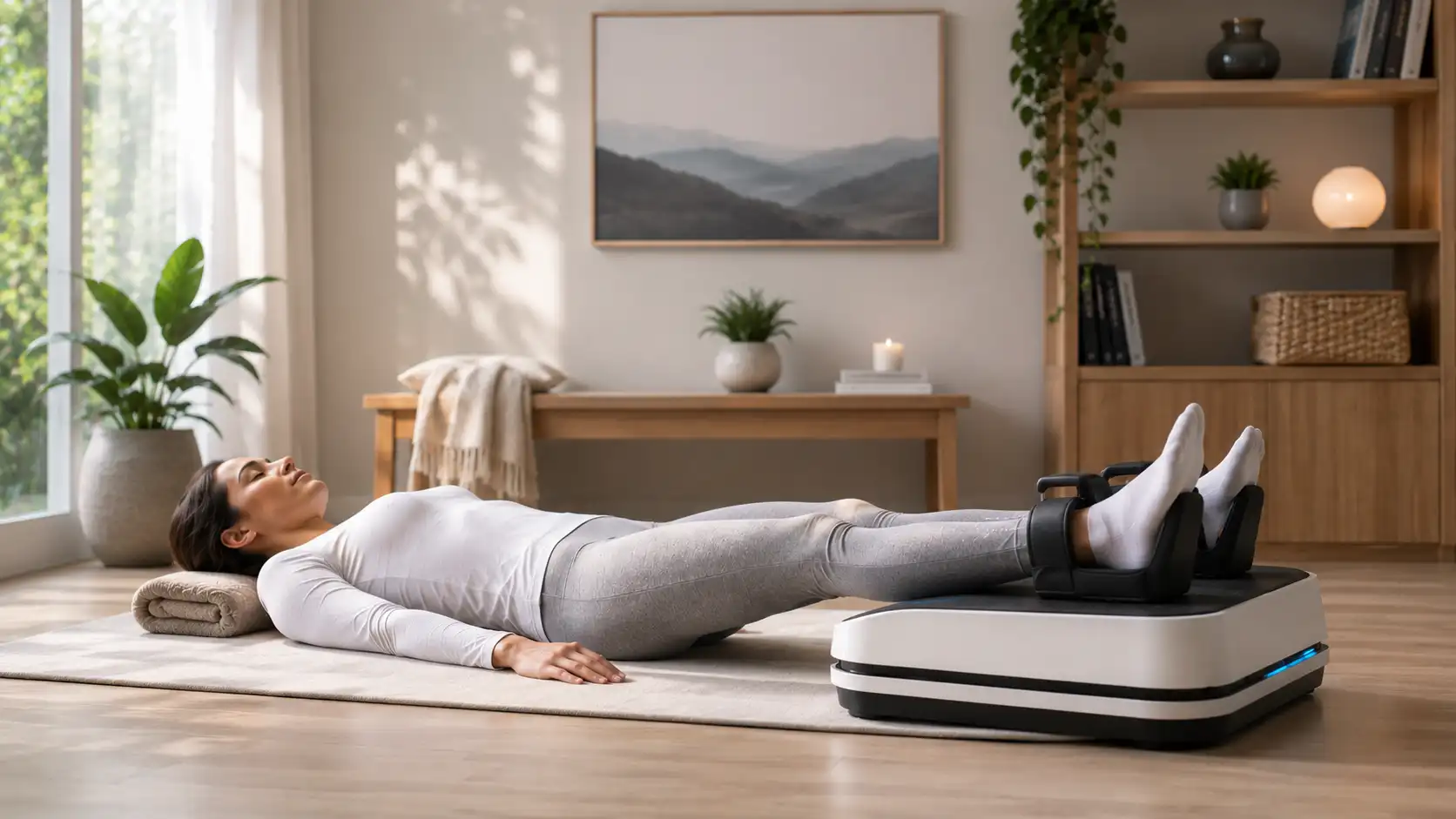
Strip away the marketing language and a Chi Machine is a compact motor unit, roughly the size of a large briefcase, with two padded cradles on top that hold your ankles. You lie on your back on the floor, rest your ankles in the cradles, and switch the machine on. From there, a motor swings your legs — and by extension your hips and lower spine — from side to side at a steady, preset rhythm. You supply no effort at all; the machine does the moving.
It was developed in Japan in the late 1980s by engineer Keiichi Ohashi and patented by the Japanese Patent Office in December 1990. It was originally sold under the name Sun Harmony before being rebranded as Sun Ancon, and many other manufacturers now sell similar devices under names like “vitality swing” or simply “chi exerciser.” Whatever the brand, the underlying idea is the same: passive aerobic exercise, meaning an outside force — the motor — applies rhythmic movement to your body instead of your muscles doing the work.
That distinction matters for the audience this device is usually recommended to. If you have arthritis, a bad back, reduced nerve sensation in your legs, or simply don’t have the stamina for a treadmill or exercise bike, a Chi Machine lets you get the circulatory benefit of movement while contributing almost none of the physical effort yourself.
How the Goldfish Motion Actually Works
The side-to-side swing has a specific origin. In 1927, Japanese physician Katsuzo Nishi created a set of six exercises known as the Nishi Health System. One of them, kingyo undo, involved lying flat and wiggling the body like a swimming fish. That same movement was later adopted into Aikido training, where it’s known simply as “the goldfish.” The Chi Machine mechanizes this exact motion.
When you switch the machine on, the ankle cradles oscillate back and forth, and because your ankles are fixed in place, that side-to-side force travels up through your legs into your hips and lower spine. The result is a wave-like, figure-8 movement through the lower body. Manufacturers deliberately keep the speed constant rather than variable, since an uneven rhythm would counteract the relaxing effect the motion is meant to produce.
Most machines let you adjust intensity rather than the rhythm pattern itself — lower settings produce a gentler sway, useful for people just starting out or recovering from injury, while higher settings intensify the swing for those already accustomed to the sensation.
What Happens in Your Body During a Session
The main physiological claim behind the Chi Machine is improved circulation. As your legs swing rhythmically, blood flow through the lower limbs increases, and several clinical trials have reported a temporary rise in local blood circulation along with reduced fluid buildup in the legs and relief from muscular aches after use. That’s a meaningfully different claim than “burns calories” or “builds strength” — it’s about movement and flow, not exertion.
The rocking motion is also thought to encourage lymphatic drainage, the process by which your body clears excess fluid from tissue. This is one reason the device has been studied specifically for people with lymphedema, a swelling condition often linked to lymph node removal during cancer treatment. Some people also report a mild rush of warmth or tingling through the legs once the machine stops — this is usually described as blood returning to a more even distribution after the oscillation ends, not a cause for concern.
Because the spine also sways gently during the movement, some users find it helps loosen tight muscles along the lower back that build up from sitting or standing in the same posture for long stretches.
Who Benefits Most From a Chi Machine
This device tends to be recommended most often for a specific set of situations rather than as a general fitness tool. People with arthritis or stiff joints often find the gentle, non-weight-bearing motion easier to tolerate than walking or cycling. Those recovering from a stroke, dealing with spasticity, or unable to move their limbs independently can benefit from passive exercise set to its lowest intensity, since it provides movement without requiring any muscle control on their part.
People with poor circulation in the legs and feet — including those with Raynaud’s syndrome, which causes cold hands and feet — sometimes use the machine specifically to help warm and re-circulate blood to the extremities. It’s also commonly recommended for general lower back discomfort and for older adults who want some form of daily movement but find standing exercise equipment too demanding on their joints or balance.
None of this makes the Chi Machine a substitute for medical treatment. It’s best understood as a low-effort circulatory aid that complements — rather than replaces — whatever care plan a doctor or physical therapist has already recommended.
What a Chi Machine Cannot Do
The most persistent myth around this device is that it helps with weight loss. It doesn’t. Passive movement, by definition, doesn’t engage your muscles or cardiovascular system the way walking, cycling, or strength training does, so it doesn’t burn meaningful calories or build fitness in the way active exercise does. If weight management is your goal, a Chi Machine session is not a substitute for that kind of activity.
It’s also not a diagnostic or medical device in the sense of treating a specific condition — it’s a relaxation and circulation aid. Manufacturer claims about “oxygenating” the body or providing the equivalent of “90 minutes of walking in 15 minutes” should be read skeptically; independent reviewers have pointed out that these figures aren’t well substantiated. What the device reliably delivers is a gentle, repetitive movement that many people find relaxing and that can temporarily improve circulation — that’s a real and useful benefit on its own, without needing to be inflated into more than it is.
How to Use a Chi Machine for the First Time
Using the machine correctly the first time makes a real difference in comfort. Start by drinking a small glass of water, then position the machine on a firm, flat surface — carpet or a yoga mat under your back works well, and make sure there’s clearance underneath the unit for the motor to move freely. Lie down on your back, center your legs on either side of the machine, and place your ankles into the padded cradles, keeping your body aligned with the machine’s centerline.
If you have any lower back or knee discomfort, tuck a pillow under your knees before you start — this takes pressure off the lower spine while your body gets used to the motion. Turn the machine on at its lowest setting for your first session, keep the timer to no more than two to three minutes, and let your body stay loose rather than tensing against the swing. When the machine stops, stay lying down for a minute or two before getting up, then roll onto your side to stand rather than sitting up straight from your back.
What to Expect During Your First Few Sessions
The sensation itself is usually described as a gentle, wave-like rocking rather than anything jarring. Many first-time users notice a rush of warmth or lightness in their legs right as the machine stops — that’s simply blood redistributing after the rhythmic motion ends, and it typically fades within a minute.
If you’re in generally poor health or recovering from illness, keep your first few sessions under a minute and build up in small increments of a couple of minutes at a time, rather than jumping straight to longer sessions. Most people find they can comfortably work up to 10–15 minutes per session over a period of several weeks, often using the machine once or twice a day. There’s no need to rush this progression — the point of a passive device like this is gradual, consistent use rather than pushing through discomfort.
Chi Machine vs. Other Low-Impact Exercise Options
If you’re weighing a Chi Machine against other beginner-friendly equipment, the key difference is effort. A Chi Machine requires essentially none from you, while even gentle cardio machines still ask your muscles and cardiovascular system to do real work.
| Equipment | Effort required | Best suited for |
|---|---|---|
| Chi Machine | None — fully passive | Limited mobility, chronic back or nerve pain, recovery |
| Stationary bike | Low to moderate | Beginners wanting light cardio with joint support |
| Elliptical | Moderate | Full-body low-impact cardio, more balance needed |
| Rowing machine | Moderate to high | General fitness once basic coordination is comfortable |
| Walking | Low | General mobility, no equipment needed |
This isn’t a ranking of “best” to “worst” — it’s a matter of what your body can currently do. If standing exercise is uncomfortable or unsafe for you right now, the Chi Machine fills a gap that these other options simply can’t, precisely because it asks nothing physical of you.
Safety Considerations for Older Adults and Sensitive Backs
Because the Chi Machine moves your spine and hips even though you’re not actively exercising, it’s worth treating it with the same caution you’d give any new form of movement. Check with your doctor first if you have a spinal condition such as a herniated disc, a pacemaker, a blood clotting disorder, or if you’re pregnant — the rhythmic motion may not be appropriate in these cases.
For most healthy older adults or people managing ordinary back stiffness, the main safety rule is simply to start slow: low intensity, short duration, and a supportive surface underneath you. If you feel dizzy, nauseated, or notice increased pain rather than relief after a session, stop using the machine and mention it to your doctor before trying again. The device is designed to be gentle, but “gentle” still means it’s a physical intervention, and it’s worth respecting that.
How long should a beginner use a Chi Machine?
Start with no more than 2–3 minutes at the lowest speed setting. If you’re in poor health, keep the first sessions under a minute. Increase gradually in small increments as your body adjusts, working up to around 10–15 minutes over several weeks.
Can a Chi Machine help with back pain?
Many people with general lower back stiffness find the gentle swaying motion loosens tight muscles and improves comfort. It isn’t a treatment for a specific spinal condition, so check with your doctor first if you have a diagnosed back injury.
Is a Chi Machine safe for elderly people?
Yes, for most healthy older adults, provided you start at low intensity and short duration. It requires no standing, balance, or muscle effort, which makes it more accessible than many other exercise machines — but a doctor’s input is still worthwhile if you have an existing health condition.
Does a Chi Machine help you lose weight?
No. It’s a passive device, meaning it doesn’t engage your muscles or cardiovascular system the way active exercise does, so it doesn’t produce meaningful calorie burn. It’s best understood as a circulation and relaxation aid rather than a fitness or weight-loss tool.
What is the goldfish motion?
It’s the name given to the side-to-side swaying movement the machine produces, based on an exercise from the 1927 Nishi Health System that mimics a fish swimming. The Chi Machine mechanizes this same motion through its ankle cradles.
How often should you use a Chi Machine?
Once or twice a day is typical once you’re past the first few sessions, with each session lasting somewhere between a few minutes and 15 minutes depending on how your body responds.
Can a Chi Machine help with nerve pain or numbness?
Some people use it to help stimulate circulation in the legs, which can offer relief for circulation-related discomfort such as cold or numb feet. It isn’t a treatment for nerve damage itself, so ongoing nerve symptoms should be discussed with a doctor.
Do you need a doctor’s approval before using a Chi Machine?
It’s not strictly required for healthy adults, but it’s strongly recommended if you have a spinal condition, pacemaker, blood clotting disorder, are pregnant, or are recovering from surgery, since the rhythmic motion affects the spine and legs directly.
Sources
- The Chi Machine Swing Message – Philadelphia Holistic Clinic
- Chi Machine and its Important Benefits – Austin Ozone
- Chi Machine in Houston: Understanding the Real Benefits and Busting Myths – TRACE Body
- How to Use the Chi Machine – wikiHow
- Contemplating Chi Machines? – DrWeil.com
See also