

Does a Chi Machine Do the Same as a Vibration Plate?
- Chi machines use passive ‘goldfish’ motion, while vibration plates use high-frequency mechanical oscillations.
- They are not interchangeable: one is designed for passive relaxation, the other for muscle stimulation and stability.
- Claims that chi machines provide weight loss similar to vibration plates are not supported by scientific evidence.
- Both devices require medical clearance for individuals with spinal issues, pacemakers, or recent surgeries.
If you are comparing a Chi Machine and a vibration plate, the short answer is no — they do not do the same thing.
A Chi Machine is a passive exercise device that swings your ankles side to side while you lie flat, creating a gentle, figure-eight motion through the hips and spine often described as a “goldfish motion.” A vibration plate, by contrast, uses rapid mechanical oscillations — typically 15 to 60 Hz — to force muscles to contract and relax dozens of times per second while you stand, sit, or hold positions on the platform.
The first relies on rhythmic, low-amplitude mobilization; the second delivers high-frequency neuromuscular stimulation. Understanding that distinction is essential before you spend money on either device, especially if you have back issues, nerve conditions, or limited mobility.
- A Chi Machine moves your legs in a slow, lateral oscillation while you lie down; a vibration plate vibrates your whole body at high frequency while you stand or sit.
- Vibration plates trigger rapid involuntary muscle contractions; Chi Machines produce a gentle, wave-like mobilization of the spine and hips.
- Weight-loss and muscle-building claims are associated with vibration plates, not Chi Machines, though evidence for both remains limited compared to active exercise.
- Safety profiles differ: vibration plates transmit significant force to the head and joints unless posture is carefully controlled; Chi Machines are generally lower impact but still require caution with certain spinal or neurological conditions.
- Neither device replaces medical treatment or structured physical therapy; consult a clinician before use if you have a pacemaker, recent surgery, severe osteoporosis, or uncontrolled hypertension.
Chi Machine vs Vibration Plate: How do they actually work?
The Chi Machine originated in Japan in the 1990s and was popularized under names like Sun Ancon and Swing Master. Its mechanism is straightforward: a motorized cradle rocks the ankles side to side at a fixed, low speed — usually around 140 cycles per minute — while the user lies supine with ankles resting in the cradle.

This motion propagates a gentle, undulating wave through the legs, pelvis, and spine. The manufacturer’s literature describes it as mimicking the swimming motion of a goldfish, hence the term “goldfish motion.” There is no vertical impact, no rapid muscle firing, and no requirement for the user to maintain balance or posture. The experience is entirely passive; the user simply lies still for a typical session of five to fifteen minutes.
A vibration plate, often marketed as Whole Body Vibration (WBV), operates on a different principle. A platform generates mechanical oscillations — vertical, pivotal (side-to-side), or rotational — at frequencies typically ranging from 15 Hz to 60 Hz. When you stand on the plate, the rapid vibrations travel up through the feet and legs, forcing muscles to contract and relax reflexively at the same frequency.
This tonic vibration reflex is the same neurophysiological response elicited by a tendon tap, but sustained over hundreds or thousands of cycles per session. The plate does not “move” your limbs in a sweeping arc; it perturbs your equilibrium, demanding constant micro-adjustments from the neuromuscular system. Advocates describe this as an “exercise mimetic” — a stimulus that mimics some physiological effects of exercise without voluntary effort.
The mechanical distinction matters. Vertical WBV platforms produce up-and-down oscillations with amplitudes of 0.1 to 7.5 mm. Rotational (pivotal) platforms tilt around a central axis, mimicking the natural hip rotation of gait. Research indicates that vertical WBV transmits 71–189% more vibration to the upper body and head than rotational WBV, a critical factor for anyone with neck issues, vertigo, or sensitivity to head vibration.
The Chi Machine, by design, transmits virtually no high-frequency vibration to the head; the motion is dampened by the supine position and the slow, sweeping amplitude. This fundamental difference in energy transmission — high-frequency perturbation versus low-frequency mobilization — underpins every subsequent comparison of effects, safety, and suitability.
| Feature | Chi Machine | Vibration Plate |
|---|---|---|
| Motion Type | Passive swinging (Oscillation) | Rapid vibration (Vertical or Rotational) |
| User Position | Lying down (supine) | Standing, sitting, or lying |
| Primary Mechanical Effect | Rhythmic passive movement | Involuntary muscle contraction/relaxation |
Does a chi machine do the same as a vibration plate for weight loss and health?
Marketing materials for vibration plates frequently claim benefits ranging from fat loss and muscle strengthening to improved bone density and lymphatic drainage. The Mayo Clinic notes that advocates suggest as little as 15 minutes a day, three times a week, may aid weight loss, burn fat, improve flexibility, enhance blood flow, reduce muscle soreness, build strength, and decrease cortisol.
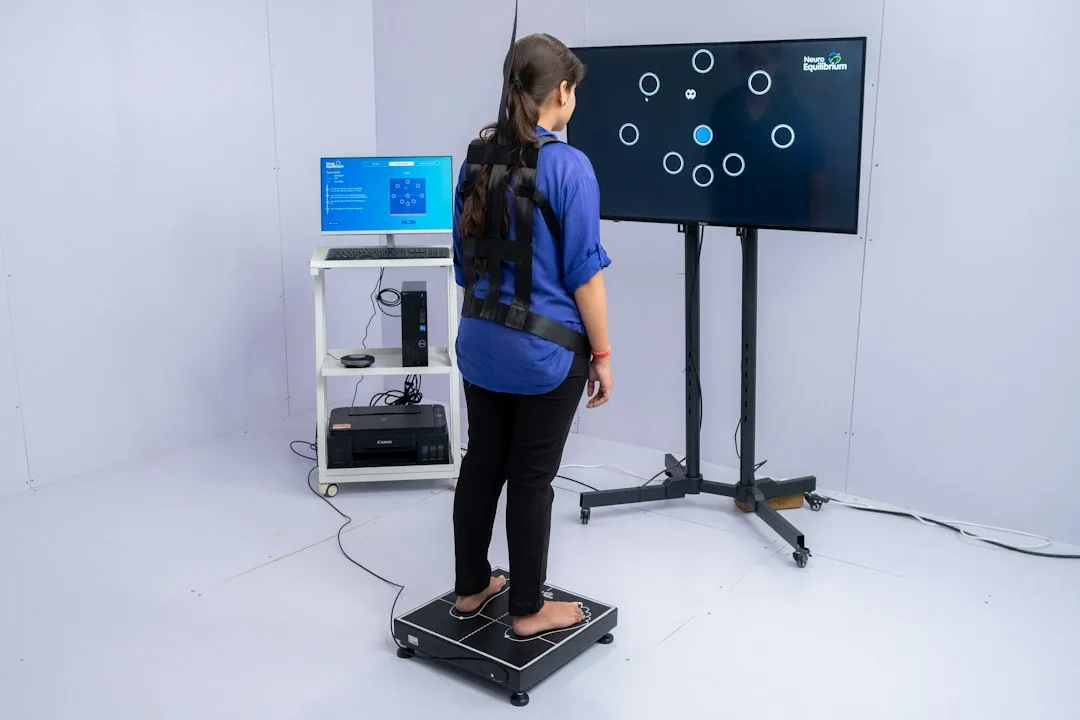
However, the same source emphasizes that comprehensive research is lacking and it remains unclear whether WBV provides the same range of benefits as active exercise like walking, swimming, or cycling. A University of Rochester Medical Center review concurs: users do not burn more calories on a vibration plate than with other forms of exercise at the same duration and intensity, and there is little evidence that vibration plates deliver significant results on their own. They may supplement a workout but are not a substitute for proven methods.
The Chi Machine makes no comparable metabolic claim. Its historical positioning is relaxation, temporary muscle relaxation, and general well-being. No randomized controlled trial has demonstrated that the Chi Machine increases resting energy expenditure, builds muscle, or reduces body fat. Some users report feeling looser or less stiff after a session, but these are subjective, acute sensations — not measurable physiological adaptations.
When vendors suggest the Chi Machine “does the same” as a vibration plate for weight loss, they are conflating two distinct mechanisms: one that challenges the neuromuscular system with high-frequency load, and one that passively mobilizes joints at low frequency.
Both devices are frequently marketed for lymphatic drainage. The rationale is sound in principle: the lymphatic system lacks a central pump and relies on muscle contraction, breathing, and movement to propel lymph. Any rhythmic motion — walking, rebounding, manual massage, or passive oscillation — can theoretically support lymphatic flow.
A massage therapist’s clinical commentary notes that both tools help support circulation and stimulate movement within the lymphatic system, offering an alternative for individuals who cannot walk or exercise traditionally. However, this is based on the general principle that movement supports lymphatics, not on specific clinical trials for either machine. Massage may be more effective for targeted lymphatic drainage than a vibration plate.
Frequency parameters matter for vibration plates. Research suggests the most effective frequencies for improving skeletal muscle endurance and strength are around 30 Hz, with 33 Hz found optimal for maximal power output in older women, yielding a 25.9% increase compared to 20 Hz and 50 Hz. Six 60-second sets at 30 Hz improved squat jumps and quadriceps power.
Higher frequencies (50 Hz) were more effective for average peak power in jump tests. The Chi Machine operates at a fixed, much lower frequency (~2.3 Hz / 140 cycles per minute) and cannot be adjusted to these ranges. It does not and cannot produce the neuromuscular stimulation documented at 30–50 Hz.
- Weight Loss: Claimed for vibration plates, but not supported for passive chi machines.
- Muscle Strength: Some evidence for WBV at specific frequencies like 30 Hz.
- Lymphatic Flow: Marketed for both, but evidence for significant clinical drainage is limited.
- Flexibility: Advocates suggest WBV can improve flexibility, though not a substitute for stretching.
Is a chi machine the same as a vibration plate in terms of safety and use?
Safety is where the practical differences become most consequential for the target audience — older adults, people with back pain, neuropathy, or balance impairments. The Chi Machine is generally the gentler, lower-impact option. Because the user lies supine, there is no load-bearing on joints, no fall risk, and minimal transmission of vibration to the head. The motion is slow, predictable, and user-controlled (most units have a simple timer and on/off switch).

However, “gentle” does not mean risk-free. The rhythmic lateral mobilization of the lumbar and thoracic spine can aggravate certain conditions: acute disc herniation, spinal instability, severe osteoporosis, or recent spinal surgery. People with pacemakers, epilepsy, or uncontrolled hypertension should also seek medical clearance. The device is not a treatment for neuropathy, though some users report temporary relief from leg heaviness.
Vibration plates carry a different and, for some users, higher risk profile. Standing on a vibrating platform transmits mechanical energy through the skeleton. For all types of vibration platforms, it is recommended to keep knees slightly bent between 125–130 degrees to minimize head movement. Locked knees transmit vibration directly up the long bones to the skull, which can provoke dizziness, headache, or — in rare cases — retinal detachment or vestibular disturbance. Vertical WBV transmits significantly more vibration to the upper body than rotational WBV.
Rotational WBV is reported to have the lowest risk and is recommended as a therapeutic for patients with chronic pain because it mimics natural hip rotation, and it offers the least number of adverse effects while activating more muscle groups compared to vertical vibration. Twelve weeks of rotational WBV engaged a broader range of muscle groups and proprioceptive responses than vertical WBV. Still, frequencies above 50 Hz may increase the risk of adverse events, and many consumer plates allow settings well above this threshold.
Neither device should be positioned as a medical substitute. If you have a diagnosed back condition, nerve impingement, recent joint replacement, or any implanted electronic device, consult your physician or physical therapist before using either machine. Physical therapists often incorporate vibration platforms into rehabilitation programs, but they select frequency, amplitude, posture, and duration based on individual assessment — not a generic preset.
The Chi Machine may be a reasonable adjunct for relaxation or temporary mobility maintenance in cleared individuals, but it does not strengthen muscle, improve bone density, or replace weight-bearing activity. The vibration plate, used correctly and at appropriate frequencies, can supplement a training program for some populations, but it is not a standalone solution for weight loss, fall prevention, or lymphatic disease. The choice between them should be guided by your specific health status, goals, and professional guidance — not by marketing equivalence claims.
What does the chi machine do for you?
It provides passive rhythmic movement of the lower body to promote relaxation and a feeling of wellness, though strong clinical evidence for specific health cures is lacking.
Is the chi machine good for lymphatic drainage?
It is marketed as such because the lymphatic system relies on movement. While passive motion may support flow, it is not a clinical replacement for manual lymphatic drainage therapy.
Does a chi machine do the same as a vibration plate exercise machine?
No. A chi machine is for passive relaxation and gentle movement, whereas a vibration plate is designed for muscle activation, stability training, and higher-intensity stimulation.
How much does a chi machine cost?
Prices vary significantly depending on the brand (e.g., Sun Ancon or Swing Master) and whether the unit is a professional or home-use model.
Sources
- PMC – Clinical Utility of Whole Body Vibration
- Mayo Clinic – Whole-body vibration effects
- University of Rochester Medicine – Do Vibration Plates Work? – urmc.rochester.edu
See also
- Chi Machine Technology Explained
- What Happens During a Chi Machine Session?
- How Chi Machines Support Relaxation and Balance
- Understanding the Infinity Motion of Chi Machines