
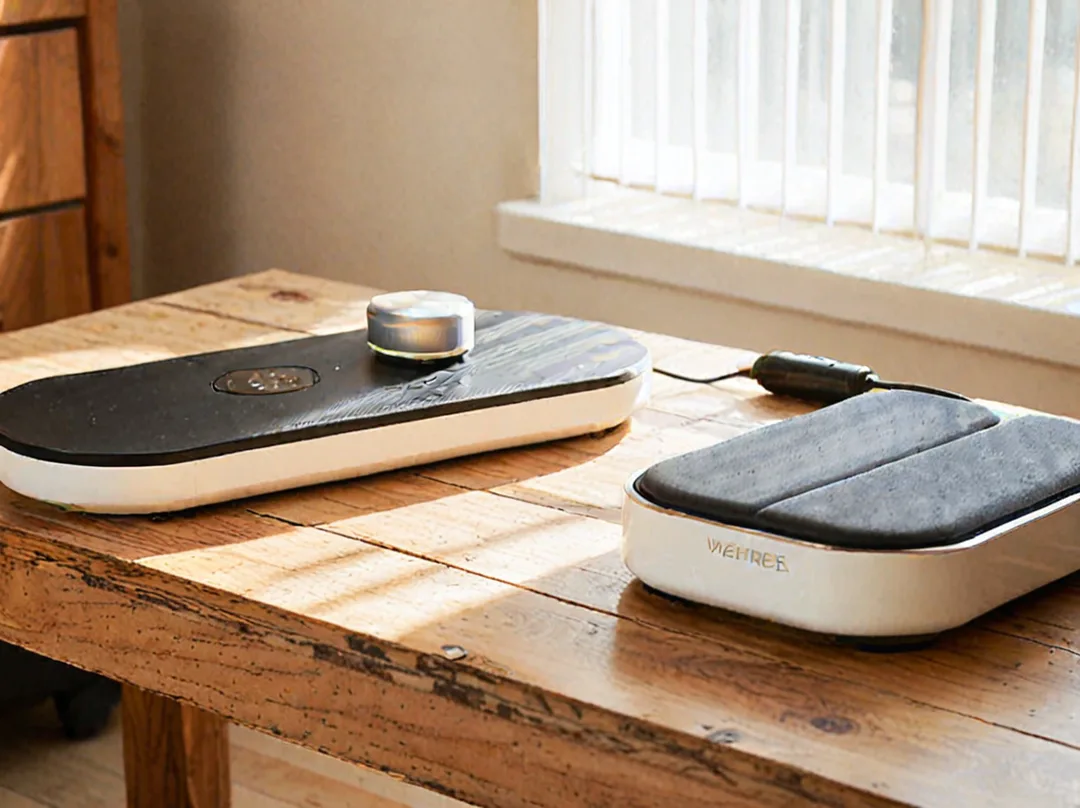
What’s the Difference Between a Chi Machine and a Vibration
- Chi machines use a side-to-side ‘goldfish’ oscillation while you lie down; vibration plates shake vertically while you stand.
- Chi machines originated in 1980s Japan for passive aerobic exercise; vibration plates trace back to Soviet cosmonaut research.
- Vibration plates have more clinical research for bone density and muscle activation; chi machine evidence remains largely anecdotal.
- Neither replaces medical treatment; both carry contraindications for spinal, neurological, or cardiac conditions.
- Choose based on goal: relaxation and gentle mobilization (chi machine) vs. strength, balance, and bone stimulus (vibration plate).
While both a chi machine and a vibration plate use mechanical oscillation to move the body, they differ fundamentally in their direction of movement, intended physiological effect, and user position. A chi machine is a passive device used while lying down that creates a gentle, lateral “goldfish” motion to encourage relaxation and spinal mobilization. In contrast, a vibration plate is typically a platform you stand or sit on, delivering rapid vertical or pivotal oscillations designed to trigger neuromuscular contractions and improve muscle strength or bone density.
How the Two Machines Move Your Body
The mechanical distinction between these two devices begins with the axis of movement. A chi machine operates through a process of passive oscillation. The user lies flat on their back—a supine position—with their ankles secured in two cradles. The machine then generates a lateral, figure-eight motion at the ankles. This movement is not a simple side-to-side shake but a rhythmic, fluid oscillation that is intended to travel from the lower extremities, through the pelvis, and up the length of the spinal column.
This specific pattern is frequently described as the “goldfish motion” because it mimics the undulating movement of a fish swimming through water. Because the body is fully supported by the floor or a mat, the user exerts no voluntary effort; the machine provides the entirety of the kinetic energy. The frequency of a chi machine is relatively low and typically remains fixed, generally operating between 120 and 160 cycles per minute.
A vibration plate, conversely, utilizes whole-body vibration (WBV). Instead of a lateral wave, these platforms generate rapid vertical or pivotal oscillations. When a person stands, sits, or leans on the plate, these vibrations move upward through the skeletal system. Unlike the fluid wave of the chi machine, vibration plates produce a high-frequency “buzz” or “shake” that triggers the stretch-reflex in the muscles.
This means that as the platform moves down and then rapidly up, the muscles are stretched and then forced to contract almost instantaneously to maintain balance and stability. This rapid cycle of contraction and relaxation occurs dozens of times per second, creating a neuromuscular demand that is entirely absent in the passive experience of a chi machine.
The frequency ranges also differ significantly. While the chi machine stays in a low-cycle range to promote a state of calm, vibration plates offer a wide spectrum of adjustable frequencies, typically ranging from 15 to 60 Hz (Hertz). The amplitude—the distance the platform moves—is also adjustable on most professional models.
This allows the user to transition from a mild stimulation to an intense vibration that requires significant active posture control. The chi machine is designed to move the body as a whole in a wave, whereas the vibration plate is designed to challenge the body’s stability through rapid, repetitive impact.
Origins and Design Philosophy
The design philosophies of these two machines reflect very different origins. The chi machine was developed in the late 1980s by Japanese engineer Keiichi Ohashi. His goal was to create a method of “passive aerobic exercise.” The philosophy behind this was that by applying a constant, rhythmic movement to the body via an external force, the body could achieve a state of oxygenation and circulation without the physical exertion associated with traditional exercise.
It was marketed as a tool for those who could not perform active workouts, aiming to provide the circulatory benefits of movement while the user remained in a state of total physical surrender. This approach aligns more closely with relaxation and wellness modalities than with athletic training.
Vibration plates have a more clinical and utilitarian origin, rooted in the Cold War era. The concept of whole-body vibration was developed for Soviet cosmonauts to combat the devastating effects of microgravity. In space, the lack of weight-bearing stress leads to rapid muscle atrophy and a significant loss of bone mineral density.
To mitigate this, researchers developed vibration platforms that could simulate the stress of gravity and force muscles to contract, thereby preserving bone and muscle mass. This “survival” philosophy eventually migrated into sports medicine and physical rehabilitation, where it is used to help athletes recover from injury or to help elderly populations maintain functional strength.
Because of these differing origins, the versatility of the hardware differs. The chi machine is a single-purpose tool; it is designed specifically for supine oscillation. There is no other way to use it effectively. Vibration platforms, however, are multi-functional.
While they can be used passively by simply standing on them, they are often used as a base for active exercises. Users may perform squats, planks, or calf raises on the platform to amplify the muscular demand. This transforms the vibration plate from a passive wellness tool into a piece of fitness equipment, a transition that is not possible with the chi machine.
What Manufacturers Claim vs. What Research Shows
When evaluating the benefits of these devices, it is necessary to distinguish between manufacturer claims and established scientific evidence. Chi machine marketers often claim that the device promotes lymphatic drainage, corrects spinal alignment, and balances the autonomic nervous system. Some suggest it can provide a “passive aerobic” effect that improves overall energy levels.

However, these claims are largely supported by user testimonials and small-scale, uncontrolled studies. There is a notable lack of high-quality, randomized controlled trials (RCTs) specifically targeting the chi machine, making it difficult to verify these health claims with clinical certainty. The perceived benefits of relaxation and “lightness” are often subjective and may be linked to the meditative state induced by the rocking motion.
Vibration plates also carry a wide array of claims, ranging from rapid fat loss and cellulite reduction to the curing of chronic pain. As with the chi machine, the claims regarding weight loss are generally unsupported by rigorous evidence. However, there is more substantial clinical data regarding bone density and muscle strength.
Some RCTs have indicated that vibration therapy can be effective in increasing bone mineral density in postmenopausal women and improving balance in older adults. The mechanism is clear: the mechanical stress of the vibration stimulates osteoblasts (bone-building cells) and improves proprioception. Nevertheless, the results vary widely depending on the frequency, amplitude, and whether the user is performing active exercises on the plate.
The fundamental distinction lies in the physiological response. A vibration plate induces an active neuromuscular response; the brain must constantly adjust the muscles to keep the body upright against the force of the oscillation. This is a form of active stimulation. The chi machine, by contrast, produces passive tissue mobilization.
It moves the joints and the spine without requiring voluntary muscle effort. While some users report a feeling of improved circulation or reduced stiffness, this is a mechanical displacement of fluid and tissue rather than a neuromuscular training effect. Neither device should be viewed as a medical cure, and the “health benefits” cited in promotional materials should be viewed as supportive wellness goals rather than clinical outcomes.
Practical Differences: Session, Setup, and Sensation
The practical experience of using these two machines is entirely different in terms of setup, sensation, and time commitment. A session with a chi machine is characterized by stillness and passivity. The user spends 5 to 15 minutes lying on their back. Once the ankles are positioned in the cradles and the machine is turned on, the user is essentially “hands-off.” The sensation is one of gentle, rhythmic rocking.
For many, this leads to a state of deep relaxation, often inducing drowsiness or a light meditative state. The setup is minimal, requiring only a flat surface and a mat for comfort. Because it is a low-impact, low-effort experience, it is often used as a wind-down activity at the end of the day.
A vibration plate session is more active and typically lasts between 10 and 20 minutes. Depending on the goal, the user may stand, sit, or perform dynamic movements. The sensation is not a gentle rock but a rapid vibration that can range from a mild buzz to an intense shaking that feels as though it is penetrating deep into the joints.
This requires active posture control; the user cannot simply “switch off” their brain, as they must maintain their balance to avoid falling or straining a joint. The experience is energizing rather than sedating, often leaving the user feeling “awake” or physically stimulated.
In terms of logistics and cost, the chi machine is generally more compact and affordable, with most home models falling between $100 and $400. They are lightweight and easy to move. Vibration plates have a much broader price range.
Basic home units may cost around $150, but commercial-grade platforms used in physiotherapy clinics can cost $3,000 or more due to their higher power, adjustable frequencies, and reinforced construction. While both take up relatively little space, the vibration plate is a heavy piece of equipment that often requires a sturdy floor to manage the transmission of vibration to the rest of the building.
Safety, Contraindications, and Medical Guidance
Safety is a paramount concern for both devices, particularly for the target audience of seniors and those with chronic health conditions. There is a significant overlap in contraindications. Both machines are strictly avoided during pregnancy and should not be used by individuals with acute thrombosis (blood clots), pacemakers, or those recovering from recent major surgery.
Severe osteoporosis and spinal instability are also critical warnings; the mechanical force—whether it is the wave of the chi machine or the shake of the plate—could potentially cause a fracture or displacement in a compromised skeleton.
The chi machine carries specific risks related to the transmission of motion. Because the movement starts at the ankles and travels up the spine, it eventually reaches the cervical spine and the head. For individuals with severe vertigo or specific cervical spine issues, this rhythmic motion may trigger dizziness or nausea. It is essential that anyone with a history of neck injuries consult a physician before use, as the passive oscillation can put pressure on the upper vertebrae in ways that the user cannot consciously control.
Vibration plates present a different set of risks due to the intensity of the oscillations. High-frequency vibration can be transmitted directly to the head if the user is standing, which may pose a risk for people with a history of retinal detachment or those prone to severe migraines.
There is also a risk associated with gallstones or kidney stones, as the vibration may cause these stones to shift, leading to acute pain. Joint replacements (such as hip or knee prosthetics) require extreme caution, as the rapid vibration could potentially loosen the implant or cause irritation in the surrounding tissue.
Neither the chi machine nor the vibration plate should ever be used as a substitute for prescribed physical therapy, medication, or medical treatment. They are supportive wellness tools. For anyone dealing with nerve damage, chronic back pain, or cardiovascular conditions, professional medical guidance is mandatory before starting either therapy. A clinician can determine if the specific type of oscillation—lateral and passive versus vertical and active—is safe for the individual’s specific pathology.
How to Decide Which Fits Your Goal
Choosing between a chi machine and a vibration plate depends entirely on the intended goal and the physical capabilities of the user. The chi machine is the appropriate choice for those whose primary objective is relaxation and nervous system down-regulation. It is ideal for people who struggle with insomnia, high stress, or those who find traditional exercise too taxing.
Because the user is fully supported in a supine position, it is a viable option for individuals who cannot stand for long periods or who have balance issues that would make a vibration plate dangerous. If the goal is gentle spinal mobilization or a feeling of lymphatic support without any physical effort, the chi machine is the more suitable tool.
The vibration plate is the better option for those seeking “up-regulation” or physical improvement. If the goal is to improve muscle tone, enhance balance, or provide a loading stimulus to the bones to combat density loss, the vibration plate is the only one of the two that can provide these results.
It is an excellent adjunct for people who already have an active exercise routine and want to amplify the effectiveness of their squats or stretches. For the user who wants to feel “energized” and a sense of muscular engagement, the vibration plate is the correct tool.
In some professional wellness clinics, these two devices are used sequentially to achieve a balanced effect. A practitioner might start a session with a chi machine to calm the nervous system and mobilize the joints, followed by a vibration plate session to activate the muscles and stimulate bone growth.
However, there is no standardized clinical protocol for this combined approach. The decision should ultimately be based on whether the user needs to “wind down” or “power up.” By understanding that one is a tool for passive relaxation and the other is a tool for neuromuscular stimulation, users can select the device that aligns with their current physical needs and health constraints.
What is 10 minutes on a vibration plate equal to?
Marketing claims often equate 10 minutes to an hour of gym work, but no peer-reviewed study validates a universal conversion. Energy expenditure and neuromuscular demand depend on frequency, amplitude, body position, and whether you perform active movements on the plate.
Can I lose belly fat on a vibration plate?
Vibration plates alone do not target abdominal fat. Some studies show modest fat loss when vibration accompanies a caloric deficit and resistance training, but the plate itself does not ‘melt’ belly fat.
What works better than a vibration plate?
‘Better’ depends on the outcome. For bone density and muscle strength, progressive resistance training has stronger evidence. For lymphatic drainage, manual lymphatic drainage by a certified therapist is more targeted. For relaxation, a chi machine or simple rest may suffice.
Is there a downside to using a vibration plate?
Yes. Excessive or improper use can cause dizziness, joint aggravation, headache, or vibration transmission to the head. Contraindications include pregnancy, recent implants, retinal conditions, and severe cardiovascular disease. Cheap plates may deliver inconsistent frequencies.
Does a chi machine count as exercise?
No. It is passive exercise — your muscles do not voluntarily contract against resistance. It does not meet ACSM definitions of aerobic or resistance exercise and should not replace prescribed physical activity.
Can I use both a chi machine and a vibration plate?
Some users do, typically on separate days or sequentially (chi machine first for relaxation, vibration plate later for activation). No clinical protocol defines optimal combination; monitor for overstimulation or fatigue.
Sources
- PubMed — Vibration transmission to the head in standing people
- Align Integration & Movement — Chi machine history and vibration platform background – alignforhealth.com
- Massage and Healing DFW — Historical context of vibration belts and chi machines
- University of Rochester Medicine — Orthopaedic expert perspective on vibration plates – urmc.rochester.edu
See also
- What is the best chi machine to buy?
- Chi Machine Technology Explained
- What Happens During a Chi Machine Session?
- How Chi Machines Support Relaxation and Balance