

Is the Chi Machine Good for Lymphatic Drainage?
- The Chi Machine uses passive oscillation, known as ‘goldfish motion,’ to stimulate movement.
- A small study in the journal Lymphology suggested potential benefits for secondary lymphedema.
- It is a tool for passive movement, not a replacement for active medical exercise.
- Consult a doctor before use, especially if you have back, nerve, or cardiovascular issues.
The Chi Machine, a passive exercise device that oscillates the ankles in a figure-eight pattern often described as a “goldfish motion,” is frequently marketed as a tool for lymphatic drainage. The central question — whether mechanical oscillation can meaningfully move lymph fluid — sits at the intersection of biomechanics and marketing claims. The lymphatic system lacks a central pump like the heart; it relies on muscle contractions, breathing, and movement to propel fluid.
Proponents argue the Chi Machine’s rhythmic motion mimics this natural propulsion. The evidence, however, remains thin. A single small clinical trial published in Lymphology over 15 years ago, involving 33 participants with secondary lymphedema and appearing to carry brand funding, reported an average weight reduction of 1.45 kg. Anecdotal reports on platforms like Reddit vary widely.
This article examines the mechanism, the limited clinical data, how the device compares to manual lymphatic drainage and other tools, and the safety considerations for the populations most likely to consider it — older adults and those with back or nerve conditions.
Understanding the Connection Between Oscillation and Lymphatic Flow
The Chi Machine positions the user supine with ankles cradled in a footrest that swings side to side, creating a wave-like motion that travels up the legs toward the spine.
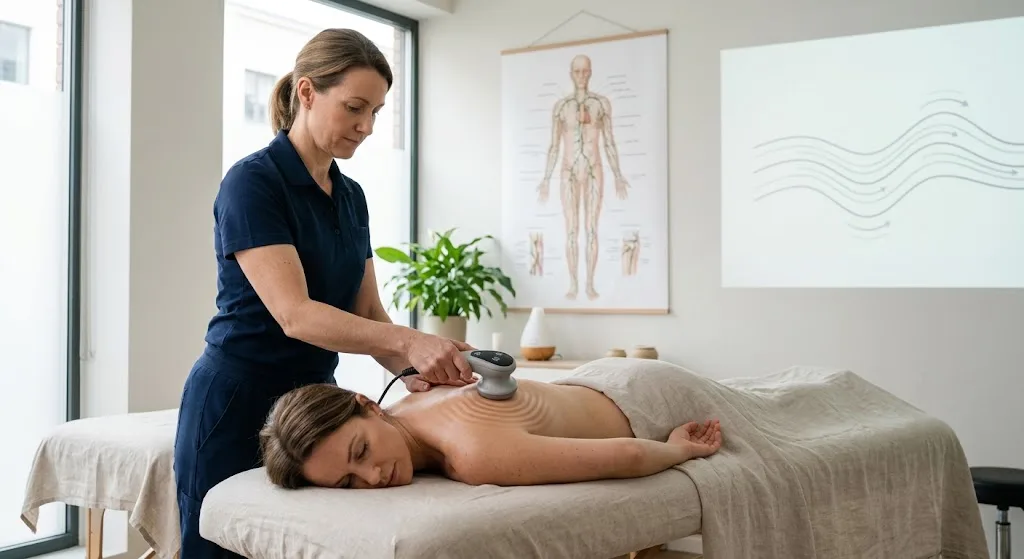
This oscillation — typically 120 to 160 cycles per minute depending on the model — is marketed as the “goldfish motion,” a term coined by the device’s Japanese originator, Dr. Shizuo Inoue, who observed the swimming motion of fish and hypothesized it could oxygenate the human body. Mechanically, the device delivers passive exercise: the user exerts no voluntary muscle effort, yet the limbs move rhythmically.
The lymphatic system is a one-way network of vessels that returns interstitial fluid, proteins, and immune cells to the bloodstream. Unlike the cardiovascular system, it has no heart. Lymph moves primarily through intrinsic vessel contractions, skeletal muscle pumps (especially in the calves), respiratory pressure changes, and arterial pulsations.
When movement is limited — due to age, injury, surgery, or neurological conditions — fluid can accumulate, causing edema or lymphedema. The theoretical appeal of the Chi Machine is straightforward: if the lymphatic system needs movement to function, and the machine moves the legs passively, could it substitute for the muscle-pump action that walking provides? Manufacturers and some practitioners answer yes. The physiological reality is more nuanced.
The Mechanism: How Chi Machine for Lymphatic Drainage Works
Active exercise engages the calf muscle pump — often called the “second heart” — where rhythmic contraction and relaxation of the gastrocnemius and soleus compress deep veins and lymphatic vessels, propelling fluid upward against gravity. Valves in these vessels prevent backflow. The Chi Machine’s oscillation moves the ankles and, by extension, the lower legs, but it does not generate voluntary muscle contraction. The movement is imposed externally.
This distinction matters. Manual lymphatic drainage (MLD), a specialized massage technique, uses light, directional strokes to stretch lymphangions (the functional units of lymph vessels) and encourage flow. A vibration plate shakes the whole body, eliciting reflexive muscle contractions. Rebounding on a mini-trampoline combines gravity changes with active muscular stabilization. The Chi Machine occupies a different niche: it moves the limbs while the user remains completely relaxed, supine, and non-weight-bearing.
Marketing materials often describe the oscillation as “pumping” lymph fluid. Physiologically, external passive movement can create shear stress on vessel walls and may stimulate intrinsic lymphatic pumping to some degree. However, the magnitude, directionality, and consistency of this effect compared to active muscle pumping or MLD are not well quantified in humans.
Some vendors cite improved circulation and detoxification broadly; these terms are not interchangeable with lymphatic drainage. The device’s primary mechanical action is rhythmic joint mobilization and soft-tissue oscillation in the lower body. Whether that translates to clinically meaningful lymph transport — especially in a compromised system with damaged vessels or nodes — remains an open question.
Evaluating Evidence: Clinical Trials and User Reviews
The most cited clinical evidence is a study published in Lymphology (the journal of the International Society of Lymphology) examining 33 patients with chronic secondary lymphedema — 28 women and 5 men, aged 39 to 88. The protocol involved daily sessions over several weeks. Results showed a reduction in test subjects’ weight by an average of 1.45 kg (approximately 3.2 lbs), attributed to fluid loss. This finding is frequently quoted in promotional contexts.

Three critical caveats apply. First, the sample size of 33 is small, limiting statistical power and generalizability. Second, the study is over 15 years old; device specifications and lymphedema management standards have evolved. Third, the Lymphology publication and related materials appear to have received funding from a Chi Machine manufacturer, introducing potential bias in design, reporting, or interpretation. No large, independent, randomized controlled trial has replicated or extended these results.
Beyond this single study, the evidence base consists of case reports, practitioner observations, and user anecdotes. Searches for “chi machine good for lymphatic drainage reddit” reveal a spectrum: some users with lymphedema or post-surgical swelling report subjective improvement in heaviness and limb circumference; others notice no change or find the motion uncomfortable. Anecdotal reports vary significantly from clinical evidence and are subject to placebo effects, concurrent treatments (compression, elevation, exercise), and natural fluctuation of edema.
The device is not FDA-cleared for lymphedema treatment. It is generally classified as a Class I or II exempt exercise device, not a medical therapy. For a population often desperate for relief, the gap between “a small study showed weight loss” and “this machine treats my lymphedema” is where caution is most needed.
- Small sample size in existing clinical trials.
- Potential funding links between manufacturers and older studies.
- High variability in anecdotal ‘chi machine lymphatic drainage reviews’.
- Lack of large-scale, randomized controlled trials specifically on this device.
Targeted Areas: Is the Chi Machine Good for Lymphatic Drainage in Legs and the System?
The mechanical action of the Chi Machine is concentrated in the lower extremities. The ankles are secured; the oscillation drives movement at the ankle, knee, and hip joints in a coupled pattern. This raises two distinct questions: what happens in the legs themselves, and does the effect propagate systemically?
Is the Chi Machine Good for Lymphatic Drainage in Legs?
For the legs, the device creates repetitive passive flexion, extension, abduction, and adduction at the ankle and subtalar joints, with coupled motion at the knee and hip. In lymphedema management, ankle pumps (active dorsiflexion/plantarflexion) are a cornerstone exercise because they activate the calf muscle pump. The Chi Machine mimics the kinematics of ankle pumps without the voluntary contraction. For individuals who cannot perform active ankle pumps — due to paralysis, severe fatigue, pain, or post-operative restrictions — passive oscillation may maintain some degree of joint mobility and tissue mobilization.
It may also provide a sensory input that reduces the sensation of heaviness. However, passive movement does not generate the intramuscular pressure spikes that actively drive lymph through valves. Clinically, passive devices are sometimes used as an adjunct to compression therapy and elevation, not as a standalone intervention. The Lymphology study participants used the machine alongside standard care; the machine’s isolated contribution cannot be disentangled.
Is the Chi Machine Good for Lymphatic Drainage System-wide?
Systemic lymphatic drainage implies movement of fluid from the trunk, arms, head, and deep abdominal/pelvic regions — areas the Chi Machine does not mechanically reach. The thoracic duct, the main lymphatic return channel, drains the lower body and left upper body into the left subclavian vein. Oscillating the legs may increase flow into the thoracic duct from the lower extremities, but it does not directly assist drainage from the upper body, breasts, abdomen, or the central nervous system (where meningeal lymphatics have distinct physiology).
Some proponents invoke a “whole-body” effect via spinal motion or nervous system relaxation. While the supine position and rhythmic motion may shift autonomic balance toward parasympathetic tone — which can support lymphatic function indirectly — this is not the same as mechanical lymph propulsion. The device is, mechanically, a lower-limb intervention. Claims of “full-body lymphatic drainage” extrapolate well beyond the physical action of the machine.
Comparison: Is the Chi Machine Good for Lymphatic Drainage Massage?
Comparing the Chi Machine to manual lymphatic drainage (MLD), vibration plates, and rebounding clarifies its place in the toolkit. MLD is a hands-on technique performed by trained therapists (or self-administered after instruction) using specific pressures, directions, and sequences mapped to lymphatic anatomy. It targets lymph nodes, watershed areas, and collateral pathways.
The Chi Machine applies a uniform, non-directional oscillation to the lower limbs. It cannot replicate the anatomical precision of MLD. Vibration plates (whole-body vibration) transmit mechanical energy through the feet to the whole body, eliciting tonic vibration reflexes — involuntary muscle contractions that do activate the muscle pump.
Intensity is adjustable; sessions are shorter (often 10–15 minutes). Rebounding adds gravitational loading and unloading cycles, which some researchers hypothesize creates a “hydraulic pump” effect on lymphatics. All three alternatives require some degree of standing, balance, or active engagement.
The Chi Machine’s unique value proposition is complete passivity in a supine position — accessible to those who cannot stand, balance, or tolerate vibration. For a bedbound or severely deconditioned patient, it may be the only feasible mechanical intervention. But for anyone capable of walking, rebounding, or vibration training, those modalities likely generate greater lymph-moving force per minute of use.
| Method | Movement Type | Effort Level | Primary Use |
|---|---|---|---|
| Chi Machine | Passive Oscillation | Very Low | Gentle relaxation/Passive movement |
| Manual Massage | Manual Pressure | None (Passive) | Targeted fluid drainage |
| Rebounding | Active Vertical | High | Cardiovascular/Systemic |
| Vibration Plates | High-frequency Vibration | Low to Moderate | Muscle/Circulation stimulation |
Safety Precautions and Medical Contraindications
The Chi Machine is not a medical treatment. It is a wellness device. This distinction is not semantic — it determines regulatory oversight, insurance coverage, and the standard of evidence required for claims. No regulatory body has approved the Chi Machine for the treatment of lymphedema, venous insufficiency, or any lymphatic disorder. For the target audience — older adults, people with back or nerve conditions, those with limited mobility — specific risks warrant explicit attention.
- Consult a physician if you have degenerative disc disease.
- Avoid use if you have a cardiac pacemaker or recent heart surgery.
- Seek medical clearance if you are pregnant or have severe osteoporosis.
- Stop immediately if you feel increased pain or dizziness.
Who Should Exercise Caution?
Individuals with recent surgeries or implants (hip/knee replacements, abdominal surgery, lymph node dissection) should obtain surgeon clearance; passive range of motion may stress healing tissues or disrupt surgical sites. People with heart pacemakers or cardiovascular issues — including uncontrolled hypertension, deep vein thrombosis (DVT) risk, or heart failure — need cardiology input; the supine position with legs elevated and rhythmic motion alters venous return and preload.
Those with acute back or nerve pain (sciatica, radiculopathy, spinal stenosis) may find the transmitted spinal oscillation aggravates symptoms; Dr. Chang noted it can help degenerative disc disease if it does not aggravate the pain — a conditional endorsement that underscores the need for individual titration.
Active malignancy in the treatment area is a standard contraindication for any lymphatic stimulation due to theoretical risk of dissemination. Severe osteoporosis or fragile skin raises fracture or shear injury concerns. Pregnancy warrants obstetric consultation. Anyone with a diagnosed lymphatic condition should view the machine as a potential complement to — never a replacement for — prescribed complex decongestive therapy (CDT).
Practical Usage and Routine Integration
Available protocols suggest starting low and slow. The Lymphology study used daily sessions; manufacturer guidelines typically recommend 5–10 minutes per session, building toward 15–20 minutes daily. A common progression: Week 1: 4–5 minutes once daily. Week 2: 8–10 minutes once daily. Week 3+: up to 15 minutes, once or twice daily. The user lies supine, ankles in the cradle, arms relaxed. Hydration before and after is advised.
Compression garments, if prescribed, are generally worn during or immediately after use per therapist guidance. The machine should not cause pain, dizziness, or increased swelling. If any occur, stop and reassess with a clinician. Integration into a routine works best when paired with elevation, hydration, skin care, and any prescribed exercises — not as a standalone “fix.” Consistency matters more than duration; a daily 5-minute session is preferable to an occasional 30-minute one.
- Start with short sessions of 5 to 10 minutes to assess tolerance.
- Gradually increase to 15 to 20 minutes for potential circulation benefits.
- Ensure you are lying down in a fully relaxed position to maximize the effect of the oscillation.
What machines help with lymphatic drainage?
Commonly used tools include vibration plates, rebounding (mini-trampolines), and oscillation devices like the Chi Machine, though their effectiveness varies.
Does Tai Chi help drain the lymphatic system?
Tai Chi involves active, mindful movement which can support lymphatic flow through muscle contraction, unlike the passive movement of a Chi Machine.
What is lymphatic drainage?
It is the process by which the lymphatic system moves fluid (lymph) through the body to remove waste and support immune function.
Is massage good for lymphatic drainage?
Yes, manual lymphatic drainage is a specific type of massage technique designed to move fluid toward lymph nodes.
Is heat good for lymphatic drainage?
While heat can improve circulation, lymphatic drainage is primarily driven by movement and pressure rather than temperature alone.
Sources
- Lymphology Journal – Clinical Study on Lymphedema – pubmed.ncbi.nlm.nih.gov
- The Skimm – Chi Machine Overview
- Cancer Rehab PT – Lymphatic Drainage Exercises
- Phila Holistic Clinic – Chi Machine Usage
See also
- What is the best chi machine to buy?
- Chi Machine Technology Explained
- What Happens During a Chi Machine Session?
- How Chi Machines Support Relaxation and Balance